2026-05-10
IOMCD
A Special Interview with Professor Dr. Samir Al‑Jubouri
Prepared by: Dr. Madeleine Kassab
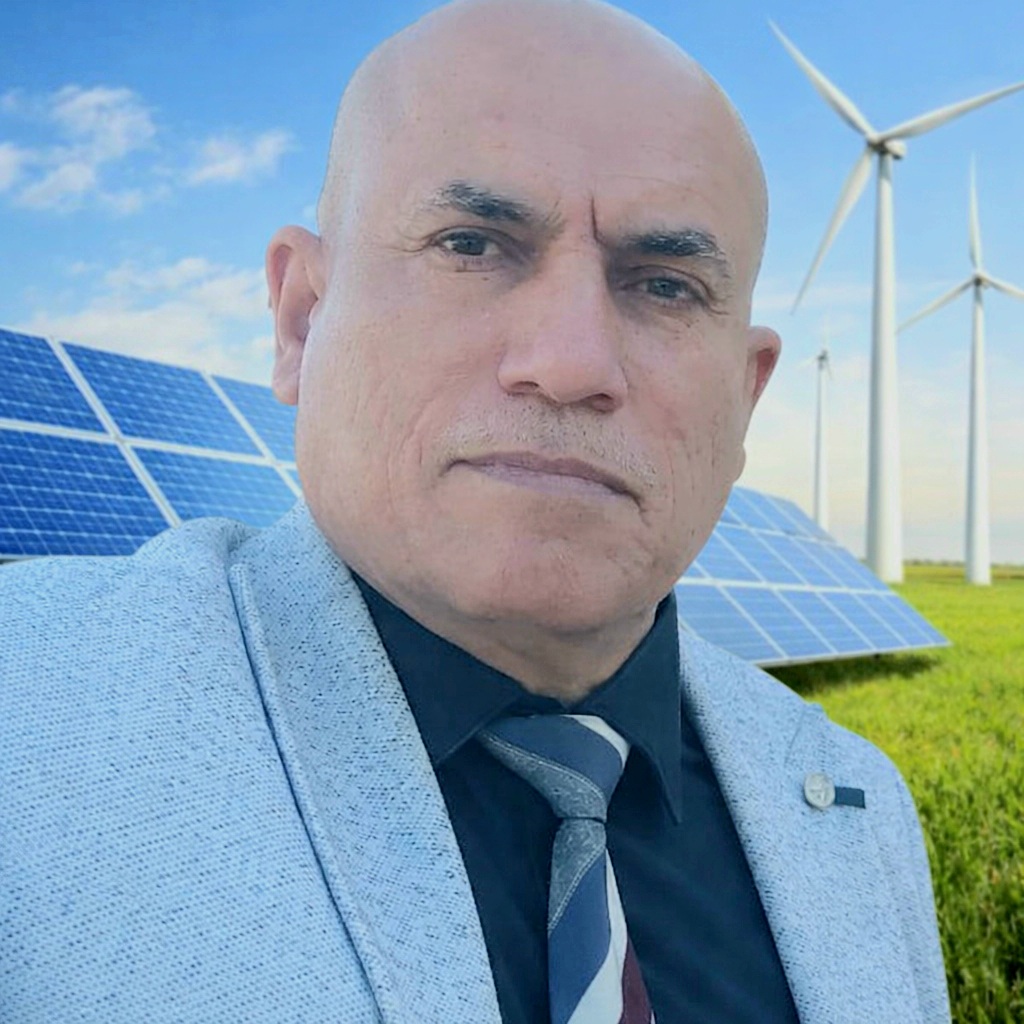
Dr. Madeleine Kassab conducted an in‑depth interview with Prof. Dr. Samir Al‑Jubouri, an Iraqi academic and researcher specializing in energy engineering and a faculty member at the College of Engineering at Al‑Kitab University. The discussion explored the transition from exploitative energy relations to balanced policies within the field of renewable energy, as well as the role of universities, scientific research, and international organizations in shaping this transformation.
Prof. Al‑Jubouri is considered one of the prominent figures in renewable energy and power systems. He has a distinguished international research footprint, with more than 250 scientific papers published in Scopus‑indexed journals. He is also a recipient of the Iraqi Minister of Higher Education and Scientific Research Award, in addition to several awards from the Ministry of Higher Education in the Kurdistan Region of Iraq. His work is characterized by a strong emphasis on linking scientific research with practical applications and providing realistic solutions to energy challenges in the Arab region, while also nurturing the research capabilities of students and young scholars.
Sustainable Energy: From the Logic of Control to the Logic of Care
The interview begins with a perspective that the world is currently experiencing a sharp intersection of political, economic, and environmental crises—making sustainable energy not merely a technical option, but a scientific, artistic, and philosophical vision that reshapes humanity’s relationship with the world.
Traditional energy systems, governed by market logic and geopolitical interests, have become tools of dominance and control. In contrast, renewable energy opens broad horizons for environmental, social, and economic justice. It also contributes to a global redistribution of energy power, as countries rich in sunlight, wind, and water increasingly emerge as new energy hubs—reshaping traditional power dynamics long tied to oil and gas.
Dr. Kassab emphasizes that sustainable development is, above all, a moral and value‑based revolution, not just a technical reform. It is an ethical science that calls for discoveries serving the continuity of life rather than individual interests, urging humanity to shift from the logic of force to the logic of care and responsibility toward the Earth.
Within this context, she highlights the pivotal role of universities as bridges between scientific research and policymaking—through knowledge production, technological innovation, and the preparation of qualified professionals capable of leading the global energy transition.
Green Hydrogen and Hybrid Power Networks
In the first thematic section, Dr. Al‑Jubouri was asked about the future of power networks in a world that relies heavily on green hydrogen, and about the technical and engineering challenges associated with such a shift.
He explained that large‑scale adoption of green hydrogen would transform power networks from traditional centralized systems into flexible hybrid systems that integrate both electricity and hydrogen. The energy infrastructure would witness deep interconnection between electrical grids and hydrogen production and storage systems, with hydrogen becoming an effective medium for storing and transporting energy across time and space.
He summarized the key challenges as follows:
- The efficiency of electrolysis in producing hydrogen
- Difficulties in storage and transportation due to hydrogen’s physical properties
- The need for an entirely new infrastructure
- Safety concerns related to hydrogen handling
- High costs during the early stages of transition.
Energy Systems as “Intelligent Organisms”
When asked whether energy systems could evolve into “intelligent organisms” capable of accumulating knowledge, learning, and adapting like biological systems, Dr. Al‑Jubouri affirmed that this trend has already begun through the development of smart grids. With advances in artificial intelligence, energy systems could become capable of:
- Learning from large datasets
- Adapting to changing loads
- Predicting failures before they occur
- Continuously improving efficiency autonomously.
He noted that such systems may mimic certain characteristics of living organisms—particularly learning and adaptation—yet they will remain advanced digital systems rather than biological entities.
The Biggest Mistake in Addressing the Energy and Climate Crisis
Regarding the most significant mistake in understanding and addressing the energy and climate crisis at planning and implementation levels, Dr. Al‑Jubouri believes the core problem lies in fragmented thinking—treating energy separately from the economy, and the environment separately from politics. There is also excessive focus on short‑term solutions, such as increasing conventional production, instead of investing seriously in sustainable transformation.
He stressed the need for a long‑term integrative vision that considers the interdependence of energy, economy, environment, politics, and technology, since the crisis is structural rather than sectoral.
Who Leads Energy Knowledge: Universities or Corporations?
The interview also explored the relationship between scientific research and governmental capacity to absorb it, as well as the roles of universities versus major corporations in producing knowledge in the energy field.
According to Dr. Al‑Jubouri, scientific research often advances faster than governments can absorb, due to bureaucracy and complex decision‑making processes. As for knowledge production:
- Universities lead fundamental and theoretical research
- Large corporations lead application and technological development.
He emphasized that real progress requires collaboration and complementarity, not competition, between the two sectors.
Al‑Kitab University: A Model for Supporting Scientific Research
The interview highlights the experience of Al‑Kitab University, where Dr. Al‑Jubouri works. He praised the university’s pivotal role in supporting research through a clear institutional policy based on:
- Financial and moral incentives for researchers
- Covering publication fees in reputable international journals
- Supporting participation in scientific conferences inside and outside Iraq
- Allocating an independent budget for scientific research.
This support has directly contributed to Dr. Al‑Jubouri’s extensive scientific output and strengthened the university’s presence in international academic forums.
On a personal level, he served as a visiting researcher at Lund University in Sweden from 2014 to 2020, and he is currently a visiting researcher at the Energy Academy in Berlin, Germany, working with a German research team for three years—an experience that reflects the university’s openness to international collaboration and the integration of its researchers into advanced global research centers.
Renewable Energy as a Mirror of Our Material and Spiritual Relationship with the Earth
In a philosophical reflection, Dr. Kassab proposed that renewable energy is not merely a technology, but a profound way of understanding humanity’s relationship with the Earth—materially and spiritually. It represents a shift from exploitation to balance.
Regarding the role of international organizations in promoting this awareness, Dr. Al‑Jubouri acknowledged that while these organizations exert significant efforts, they remain insufficient—especially in translating theoretical awareness into practical, scalable programs.
He offered an example of a model that can be generalized: decentralized solar energy programs in some developing countries, which integrate technology with social and cognitive development and serve as practical frameworks for improving quality of life and enhancing energy justice.
Closing Remarks
At the end of the interview, Dr. Madeleine Kassab expressed her deep gratitude to Professor Dr. Samir Al‑Jubouri for dedicating his time to contribute to public awareness through the International Organization for Media, Creativity & Development, and for his continuous efforts to share his expertise across scientific, developmental, and creative platforms. She affirmed that such dialogues are essential components of the broader transformation toward policies of balance that honor both humanity and the Earth.
The full interview text is available in Arabic at the following link: https://iomcd.org/php/viewInterview.php?id=77&lan=1