2026-05-17
IOMCD
Interview with Professor Dr. Salwa Hassan
Prepared by Dr. Madeleine Kassab
Dr. Madeleine Kassab opened the interview by emphasizing that the world today is experiencing a profound imbalance between utilitarian materialism and the need to invest human and spiritual capacities in order to achieve holistic advancement. She stressed that art is not merely an aesthetic space, but a cognitive structure that shapes the way human beings understand themselves and the world, and helps them confront material, psychological, and intellectual challenges.
She pointed out that any developmental project “remains incomplete unless the human conscience inhabits in all its details,” and that art is the primary vessel of this conscience, for it mediates between idea and emotion, logic and feeling, matter and meaning.
From this perspective, Dr. Kassab introduced her guest in the interview:
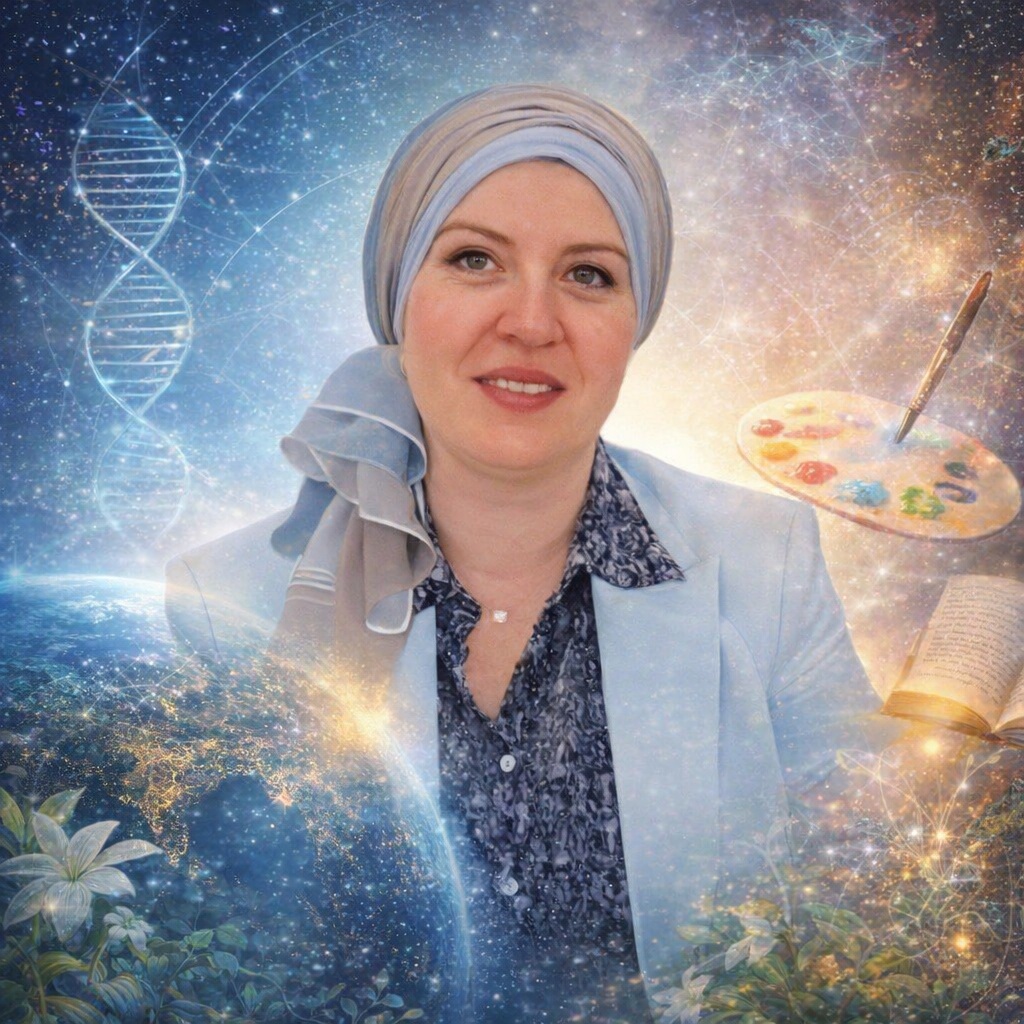
Prof. Dr. Salwa Hassan, Dean of the Faculty of Applied Arts at Badr University in Assiut, and a distinguished expert in academic training, media consultancy, skills development, and the empowerment of women and children. The interview aimed to explore in depth the role of applied arts in scientific and developmental progress, drawing on her extensive research and field experience.
*Applied Arts and Education: From Knowledge Transfer to a Living Cognitive Ritual
Dr. Kassab began with a question about the crisis of traditional education, which has become—as stated in the interview—“tedious for wide segments of students,” stressing the need to integrate science with art to produce content that speaks to the intellect without stripping the learner of the emotional energy that enables deeper understanding.
Dr. Hassan responded by affirming that applied arts can humanize science, transforming it from a process of “information loading” into a sensory and visual experience. She highlighted three main dimensions:
- Graphic design and data visualization: where numbers become visual narratives. As the text states: “Instead of reading dry data tables, applied art transforms numbers into visual stories.”
- Industrial design and user experience: turning scientific laws into tangible models that students can physically sense.
- Architecture and learning environments: designing classrooms according to the “psychology of design” to create spaces that foster psychological balance and learning readiness.
She also emphasized the need for academic quality to evolve into an architectural process, one that measures the ability to evoke wonder—not merely quantitative learning outcomes.
*Applied Arts and Health: From Decoration to Healing Design
When asked about the relationship between art and health, Dr. Hassan explained that applied art has become part of the therapeutic structure, not just an aesthetic addition. She identified three key areas:
- Healing environment architecture: using colors, natural materials, and biophilic design to reduce stress.
- Medical device design: transforming intimidating machines into artistic forms, especially for children.
- Art therapy: using creative processes as diagnostic and therapeutic tools.
She provided documented examples from the Arab world, including Egypt’s 57357 Children’s Cancer Hospital, autism centers in the UAE, and mental health facilities in Morocco and Tunisia. She also highlighted the role of dynamic lighting and digital environments in pain reduction and circadian regulation.
*Art, Advertising, and Sustainability: From Selling Products to Selling Values
Dr. Kassab asked about the ability of art and advertising to shape positive collective awareness toward sustainability. Dr. Hassan replied that advertising must evolve into a cultural and educational discourse, moving beyond consumption toward a “philosophy of extended benefit.”
She highlighted three main tools:
- Humanizing sustainability: turning environmental data into emotionally resonant visuals.
- Narrative advertising: portraying environmental behavior as a daily act of heroism.
- The purple and circular economy: where applied arts become engines of an economy rooted in beauty and culture.
She offered practical examples:
- Transforming palm waste and ocean plastics into artistic furniture.
- Designing packaging that becomes a plant after use.
- Creating visual identities for green cities.
- Sustainable fashion and environmental installation art.
*Empowering Women and Children Through Applied Arts
Another part of the interview explored how applied arts empower women and children. Dr. Hassan affirmed that art is not a luxury but an economic, psychological, and cultural tool.
Women’s empowerment through:
- Economic independence via crafts and design.
- Elevating traditional crafts into high-end creative industries.
- Using design as a form of cultural resistance to reshape women’s representation beyond stereotypes.
Children’s empowerment through:
- Designing educational environments that respect their physiology and encourage exploration.
- Using art therapy as a means of expression for children experiencing trauma.
*Artificial Intelligence and Art: Authentic Spirit or Skilled Imitation?
Dr. Kassab asked whether artificial intelligence can produce authentic art. Dr. Hassan responded that AI “does not know love, loss, or ecstasy,” and therefore it lacks the emotional context that gives art its authenticity.
Despite its impressive mimicry, AI remains—as she described—a “probabilistic engine,” while the human being is a “value-driven engine.” Thus, authentic art will remain inherently human, even as AI transforms methods of production and interaction.
*Art as a Bridge Between Cultures and a Contemporary Reimagining of Heritage
The final question addressed the role of art in transcending political, social, and religious barriers. Dr. Hassan affirmed that art speaks to the Common Human Interest, creating “grey zones” for dialogue and dissolving the demonization produced by ideology.
Regarding heritage, she described it as a living organism. Authenticity, she argued, is not replication but the extraction of aesthetic philosophy and its reintroduction in contemporary functions, such as:
- Using “mashrabiya” patterns in smart building façades.
- Employing 3D printing to revive Mamluk ornamentation.
- Developing traditional crafts into luxury products.
Conclusion
The interview concluded with a message of gratitude from Dr. Madeleine Kassab to Prof. Dr. Salwa Hassan, in appreciation of the “rich flow of artistic and scientific insight” and her contribution to raising awareness through the International Organization for Media, Creativity and Development.
+The full text of the interview is available in Arabic at the following link: https://iomcd.org/php/viewInterview.php?id=78&lan=1