2026-06-14
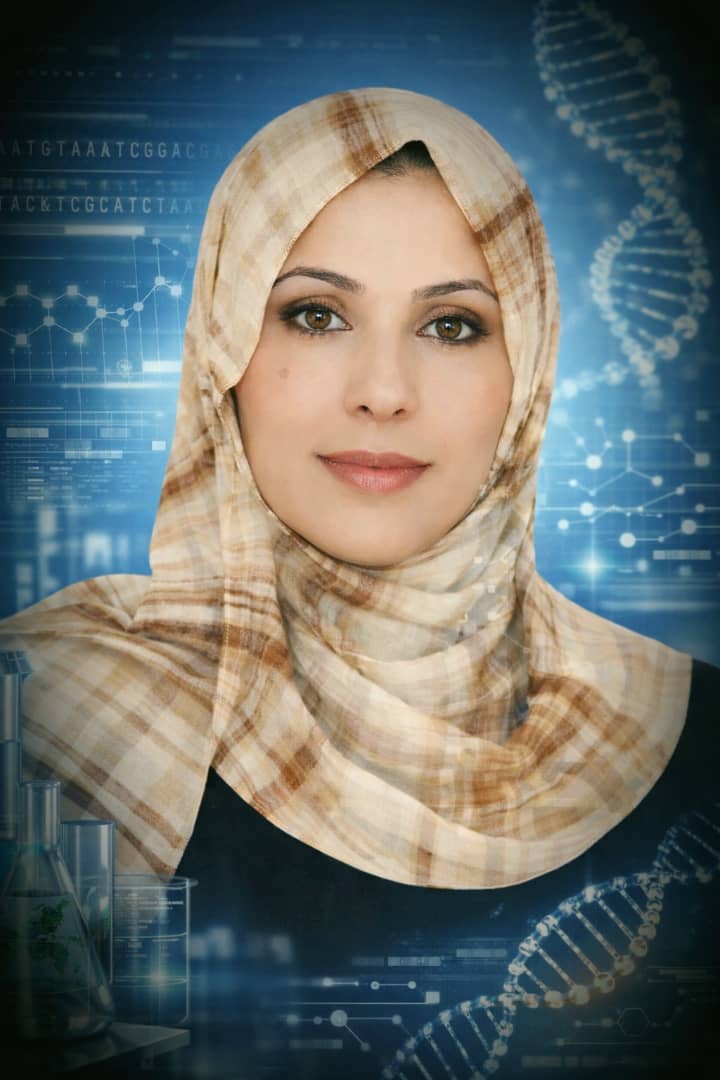
In an era where the pace of economic growth accelerates in ways that amplify environmental risks, and where challenges touching the very essence of humanity’s relationship with the Earth continue to intensify, examining the intersection between political economy and the environment becomes both an intellectual and ethical necessity. Within this context, Dr. Madeleine Kassab conducted an in‑depth interview with Dr. Iman Gatea, a specialist in biotechnologies at the University of Baghdad and head of the Biotechnologies and Bioremediation Division at the Center for Environmental, Water, and Renewable Energy Research and Technology. With four patents and nearly fifty published studies in Arab and international journals, Dr. Iman’s perspective stands as a scientific reference in environmental issues and circular economy research.
The conversation begins with a central question: How can a balance be achieved between rapid economic growth and environmental protection? From this question emerge several thematic axes addressing economic philosophies, international law, biotechnology, human well‑being, waste management, economic competition, and the role of universities and experts in building sustainable environmental awareness.
1. Capitalism and Socialism: Divergent Philosophies, Divergent Environmental Impacts
Dr. Iman explains that the impact of environmental resource management varies according to political orientation. In capitalist systems, “priority is given to rapid growth and profit,” which leads to resource depletion and increased pollution. In contrast, socialist systems rely on “central planning and government oversight,” enabling the adoption of more comprehensive environmental protection policies, albeit within limited economic capacities.
She notes that biotechnologies represent a point of convergence between the two systems, as they can treat wastewater, reduce emissions, and improve production efficiency. She cites the use of microorganisms in wastewater treatment plants as a clear example of the effectiveness of these technologies.
She concludes that political orientation is the primary determinant of successful resource management, and that integrating biotechnologies into public policy is essential for achieving balance between development and environmental protection.
2. National and International Law: From Theory to Implementation
According to Dr. Iman, coordination between national and international legal frameworks is the “cornerstone” of addressing environmental risks resulting from accelerated economic activity. International agreements such as the Paris and Kyoto Protocols provide general frameworks, yet national implementation often suffers from “uneven capacities and insufficient funding.”
She identifies the requirements for moving from theory to practice:
- Continuous monitoring
- Periodic review
- An active role for civil society
- Exchange of expertise among states
- Measurable environmental performance indicators.
However, practical obstacles—such as limited funding and weak institutional capacity—remain major challenges. Therefore, she stresses the need for multi‑dimensional strategies that combine sustainable financing, technological development, and administrative reform.
She affirms that the success of environmental policies depends on balancing international commitments with national capabilities, and on building a “flexible and transparent” legal environment that supports innovation.
3. Human Needs and Well‑Being: A Dual Relationship with the Environment
Dr. Iman explains that modern human needs have become closely tied to comfort and technology, leading to “changes in the quality and quantity of natural resource exploitation.” Technological advancement has increased comfort levels, but it has also intensified demand for water, energy, minerals, and raw materials—resulting in resource depletion and ecosystem degradation.
She describes the relationship between well‑being and the environment as dual‑sided:
Positive Aspects
- Improved resource‑management efficiency
- Development of clean technologies
- Enhanced environmental awareness
- Use of big data and artificial intelligence for environmental monitoring.
Negative Aspects
- Excessive consumption
- Dependence on non‑renewable resources
- Biodiversity loss
- Digital‑infrastructure challenges
- Information‑security risks.
She emphasizes that the digital age offers major opportunities for resource management, yet it also introduces challenges that require policies balancing consumption with sustainable development.
4. Economic Competition: Between Innovation and Environmental Pressure
Dr. Iman argues that economic competition can be a positive force when managed wisely, as it “stimulates innovation and the adoption of clean technologies.” However, it can also become harmful when companies disregard environmental standards in pursuit of rapid profit.
She stresses the importance of:
- Regulatory policies
- Effective oversight
- Harmonized international environmental standards.
These elements are essential to ensuring that competition supports environmental transformation rather than undermining it.
5. Transforming Waste into a Circular Economy: Between Bio‑Innovation and Ethical Challenges
Dr. Iman explains that transforming waste from a burden into a “vibrant market” requires an integrated system combining technology with supportive policies. Bio‑innovation is a central pillar, enabling the use of living organisms to break down waste and produce valuable biological materials. However, this pathway raises ethical concerns, particularly regarding genetically modified organisms and their potential risks to biodiversity.
She outlines the requirements for transitioning to a circular economy:
- Strong financial infrastructure
- Policies that encourage research and development
- Effective waste‑collection and sorting systems
- Skilled workforce training
- Clear regulatory frameworks
- Strict ethical standards.
She highlights the need for modern laboratories and international partnerships to ensure the safe use of microorganisms.
6. Wars and Disasters: The Role of Experts and Biotechnologies
During wars and environmental disasters, experts in environmental economics play a crucial role in guiding rapid response and setting priorities. Biotechnologies emerge as effective tools for removing pollutants from water, air, and soil due to their rapid action and low cost.
Dr. Iman anticipates the development of smart microbial networks—systems that continuously clean the environment using artificial intelligence and the Internet of Things.
Yet this future faces challenges:
- Risks of genetic manipulation
- Need for strong infrastructure
- Logistical difficulties in unstable environments
- Legal and ethical concerns.
She stresses that integrating technology with ethics is essential for the success of such networks.
7. Universities and Environmental Identity: From Knowledge to Behavior
Dr. Iman believes that universities can transform environmental awareness into a cultural identity by:
- Developing curricula that link environmental issues with the humanities
- Launching community‑service programs
- Building partnerships with institutions
- Integrating psychological dimensions into waste‑management education.
She notes that “the weak academic focus on psychological factors” limits the effectiveness of environmental efforts. Therefore, awareness programs must address emotions and cultural values to influence behavior.
Biotechnologies, she adds, can serve as educational and awareness‑raising tools that build trust and connect scientific knowledge with practical application.
Conclusion
At the end of the interview, Dr. Madeleine Kassab thanked her guest for “this generous and insightful contribution,” which combined theoretical depth with practical expertise and opened new horizons for understanding the relationship between economy, environment, technology, and ethics. She affirmed that a sustainable environmental future can only be achieved through the integration of science, policy, and collective awareness.
+The full text of the interview is available in Arabic at the following link: https://iomcd.org/php/viewInterview.php?id=81&lan=1